News
“The greatest value of the New Basque Cuisine was the creation of a collective culinary intelligence”
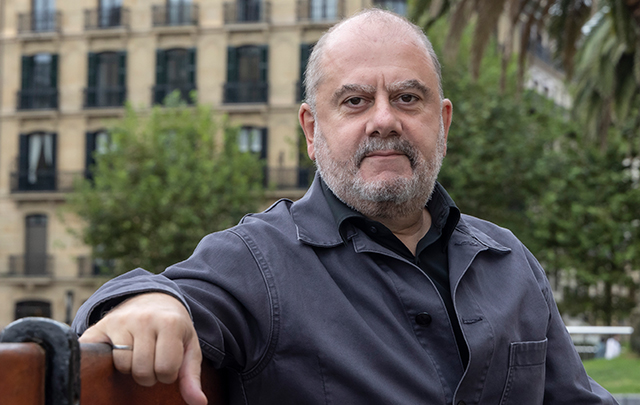
Benjamín Lana points out that during a difficult period in the Basque Country, everything changed in the kitchens, “where the good people were and those who got along best.” For this reason, he praises “the strength of the team” as the most distinctive feature of a generation that will be honored at San Sebastian Gastronomika
The 50th anniversary of that “first wake-up call that cuisine could be improved” is the perfect moment to reflect on and appreciate the influence of a movement that, as Lana points out, always respected the codes of flavor that any Basque would recognize and, furthermore, elevated the role of the chef to the status they all deserved. What has this movement meant for cuisine and for society in general? The New Basque Cuisine was the spark that ignited a fire that has since spread over the years. It was that first wake-up call that cuisine could and should improve, and it marked a major revolution that continues to this day—logically, now in a different way.
For the Basque Country, it represented a modernization that put it on the global gastronomic map, and the group’s approach is also fascinating—how they decided to organize themselves and the vision they shared. It’s remarkable how astute they were to realize in Madrid, at that first roundtable organized by the Club de Gourmets, that the French were speaking a language they understood yet found surprising, and when they discovered what Nouvelle Cuisine had entailed, they realized that this could and should also be done in Spain, which had almost begun to embrace democracy, leaving behind the dictatorship, while France was the epitome of modernity.
What would be their hallmark?
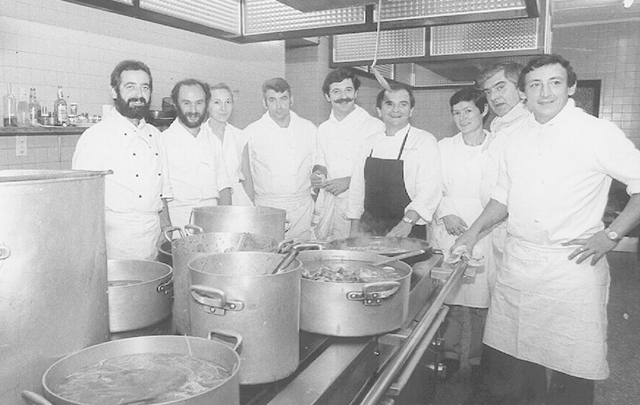
All of this began in Madrid, where Pedro Subijana and Juan Mari Arzak attended that roundtable discussion, which was also attended by chefs from many other places who did not reap the same benefits as the Basques did. From then on, they began cooking together, sharing, realizing that there was an opportunity and that they too could do the same, and that, building on traditional Basque cuisine—both that of the farmhouses and that of the sea—they could create something new.
The strength of the team was what made it unique, because things were also happening in Catalonia, but there, individuals were working in their own restaurants and lacked the vision to see it as a movement. All of this gave rise to a collective culinary intelligence that was extremely rare until then. That, for me, is the great value of this New Basque Cuisine, whose influence spread throughout the country.
In terms of the culinary aspect, what are the main principles of this movement and its contributions?
They start from traditional cuisine and a code of traditional flavors; that is, they don’t create from scratch, but rather evolve tradition. They manage to add modernity, especially in cooking techniques, the lightness of the dishes, the beauty of the presentations, the refinement, and the reinterpretation of an existing repertoire of recipes. Part of it was very old and part not so much, but it was accepted as such. I think there’s another element that’s also very important, and that’s the emphasis on the market. It was Bocuse who told them that a chef must go to the market every day, and this awareness of market-driven cuisine is a mantra that the people of Guipúzcoa have always embraced. There, the product is elevated to a central category, with an emphasis on seasonality, origin, and preparation without distorting the basic qualities of the food. Issues that seem obvious today, but weren’t so obvious in the 1970s.
Like the idea of the signature chef?
Yes, and that also originated in France. The chef begins to be creative, a public figure, a gastronomic intellectual. The signature chef changes the whole picture, and that’s where the great restaurants come from. Previously, haute cuisine was done in hotels, and chefs weren’t the most important people in a restaurant. Then this signature chef builds a reputation and begins to be respected in a different way, making his way into the public sphere in the manner we know today.
Was it more about ingenuity or observation?
Actually, it’s not that they invented everything: they took recipes from farmhouses, existing ingredients, ideas from France, their own ideas, and the know-how to create a restaurant, organize it, work within it, and engage customers. But it’s true that they then did something truly unique with all those ingredients without abandoning tradition, because the codes of flavor remain the same.
When a 70-year-old Basque man went to Arzak for the first time to eat a kabrarroka cake—which had neither the texture nor the appearance nor anything resembling what he had eaten before—he felt he was eating his own food.
How did this New Basque Cuisine influence the subsequent major movements in the world’s kitchens or in the kitchens of Spain?
In the case of Spain, it had a very significant impact. Until Ferran Adrià burst onto the scene in the late 1990s, there were nearly 20 years during which all the prevailing ideas in fine dining emerged from this movement. The concept of modern haute cuisine was the one the Basques championed around the world. It had tremendous momentum, and thanks to that collective spirit of sharing everything, it’s fair to say it ended up influencing everyone to a greater or lesser extent.
How far or how long can that influence extend?
It extends to the present day, but not in the same way it began. The curious thing is that some of the most important figures, like Arzak or Pedro Subijana, are still active. The revolutionaries are eighty years old and still going strong. And I think that in Gipuzkoa, for a while, what happened was that, under the influence of such a strong generation, it hasn’t been so easy for those who came after. It was easier to stand out elsewhere, because the shadow cast by so many stars in the region had made things a bit complicated. And, moreover, there is a reverential respect for their work. No chef has ever questioned them.
In Gipuzkoa, curiously, what has happened recently is that newcomers are clinging more to the region and tradition than to creative cuisine. While elsewhere there has been a break with tradition, in the Basque Country it never happened. No one said, “I’m going to do anti-Basque cuisine.” Everyone feels indebted and grateful.
Could that have been, in some way, counterproductive?
Their influence, in a way, held the scene together, but not many people later dared to build major restaurants. From the perspective of more traditional cuisines, Donostia was always very strong. And I understand that the Gipuzkoa area was too, and now that’s what’s in vogue. In the Basque Country, we’ve always gone to grills, but now it’s the trend. People are more into that than into new versions of creative cuisine.
Let’s say that’s the case with Mugaritz. It’s the only one that remains, and I say this affectionately, the ‘black sheep.’ It’s the only one that goes against the grain, with a different approach. But it’s undeniable that almost everything that emerges is linked to the region, to local produce, to the producers, and to that type of cuisine. They no longer do disruptive cuisine.
To what extent was the social context in the Basque Country influential?
It was a delicate situation, and it’s true that the news coming out of the Basque Country often wasn’t positive. However, in the kitchen, everything was changing: here were the good ones, the ones who did it best and got along well. They were able to go out into the world as a united front and always present the movement as a solid rock, even though they sometimes had their differences with one another. But when it came time to take the stage, they acted as one, and that gave them tremendous strength.
There are many names linked to this movement, but I’m going to ask you to tell me about the two pioneers, Juan Mari Arzak and Pedro Subijana.
They both started almost at the same time, but what Juan Mari was developing and creating found success sooner, and the stars came his way first. He had the idea of the “chef-author” and developed it very early on. Arzak possesses creativity and intelligence, because almost all great chefs are very intelligent people. And he comes from a family where culinary tradition carries great weight. He burst onto the culinary scene with a passion of his own, and that allowed him, using his creative talent, to occupy that space that everyone has come to recognize. For many years, he was the number one chef in Spain, the trailblazer.
And what about Subijana?
For me, Pedro is the architect of New Basque Cuisine; he is the most systematic one, the one who gives form, method, and coherence to this entire project of Basque cuisine. And he has always had that pedagogical drive.
They are two geniuses, but one is more intuitive and creative, and the other is more structured. They are the two leading figures of a movement, and both possess immense talent. They love and respect each other, and they have competed and argued, just as siblings do.
This movement will take center stage at San Sebastian Gastronomika - Euskadi Basque Country. What can you tell us about it?
It will be the central theme. We will try to look both at the past and at its current influence. We’ll bring back some of the key figures, though many have passed away; we’ll revive all those restaurants so that all the subsequent generations who consider themselves children of this revolution—and international chefs who recognize its influence—have a voice.
Keep in mind that, during the 1980s and especially the 1990s, the Basque Country was the destination of choice for nearly all aspiring chefs outside of France. Everyone wanted to pass through the place where things were happening. There are many Japanese, English, and Latin American chefs who spent time in the kitchens of the Basque Country—and at the Irizar School—during those years when it was, as the English say, ‘The place to be.’ We’re going to try to pay tribute to it in a way that does it justice.
Related news
News

The most maritime and experiential edition of Gastronomika celebrates half a century of New Basque Cuisine
News
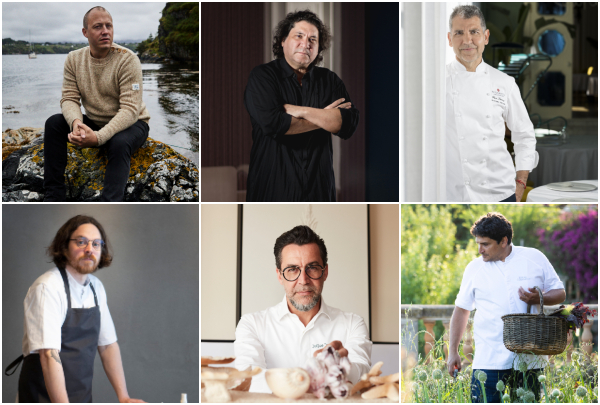
Gastronomika 2026 is broadening its international outlook by welcoming Mark Kurlansky, Mauro Colagreco, Jacopo Ticchi and Poul Andrias Ziska.
The 28th edition of the congress, which will take place from 5 to 7 October under the slogan 'The spark that lit the fire', will feature new voices as part of a programme dedicated to the 50th anniversary of New Basque Cuisine. This year will also see a global cod festival, with chefs from various countries taking part.
News
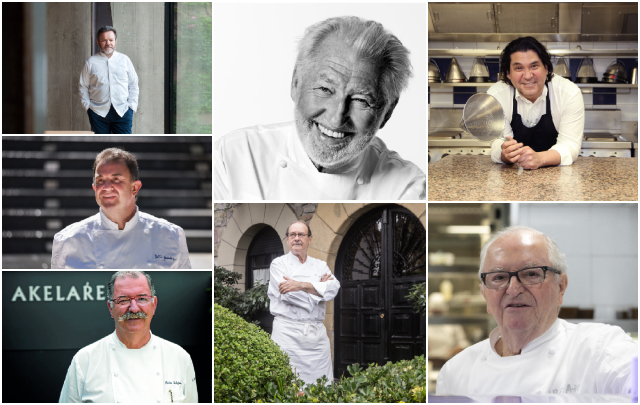
Gastronomika 2026 will pay tribute to the 50th anniversary of New Basque Cuisine
News
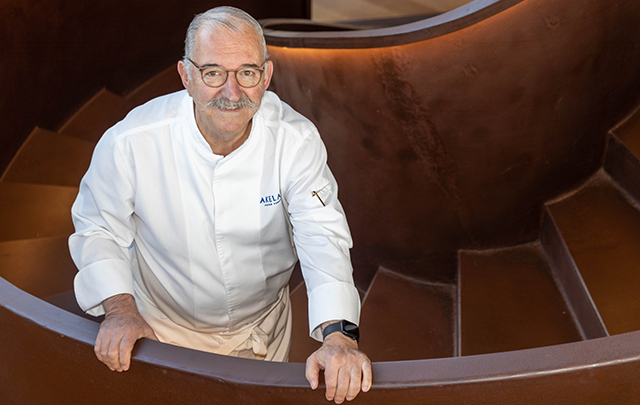
“The movement lives on in the younger generations”
Pedro Subijana is one of the key figures in the birth of the New Basque Cuisine. Fifty years later, at the age of 77, he remains at the helm of Akelarre, and in his legendary restaurant he reflects on those early years when everything came about spontaneously yet with determination
News